
Welcome to Week Three — You're Over Halfway There!
This week, we shift focus from supporting the liver to helping the body eliminate what it no longer needs — think: water-soluble waste, hormone metabolites, and everyday toxins.
Please read the drop down tabs below for more information on what to do these next two weeks.
Now that the liver’s had some love, it’s time to open up the exit doors: the gut, kidneys, and lymphatic system, and support the natural detox pathways that keep things flowing. We’re also attuning to our cycle, because it’s in these ingredients that our hormones can regulate best as well as find a natural routine with eating to replenish the vitamins, minerals, and antioxidants the body needs most.
-
What This Looks Like Nutritionally:
Slightly increasing protein and amino acids to help the body process and shuttle waste
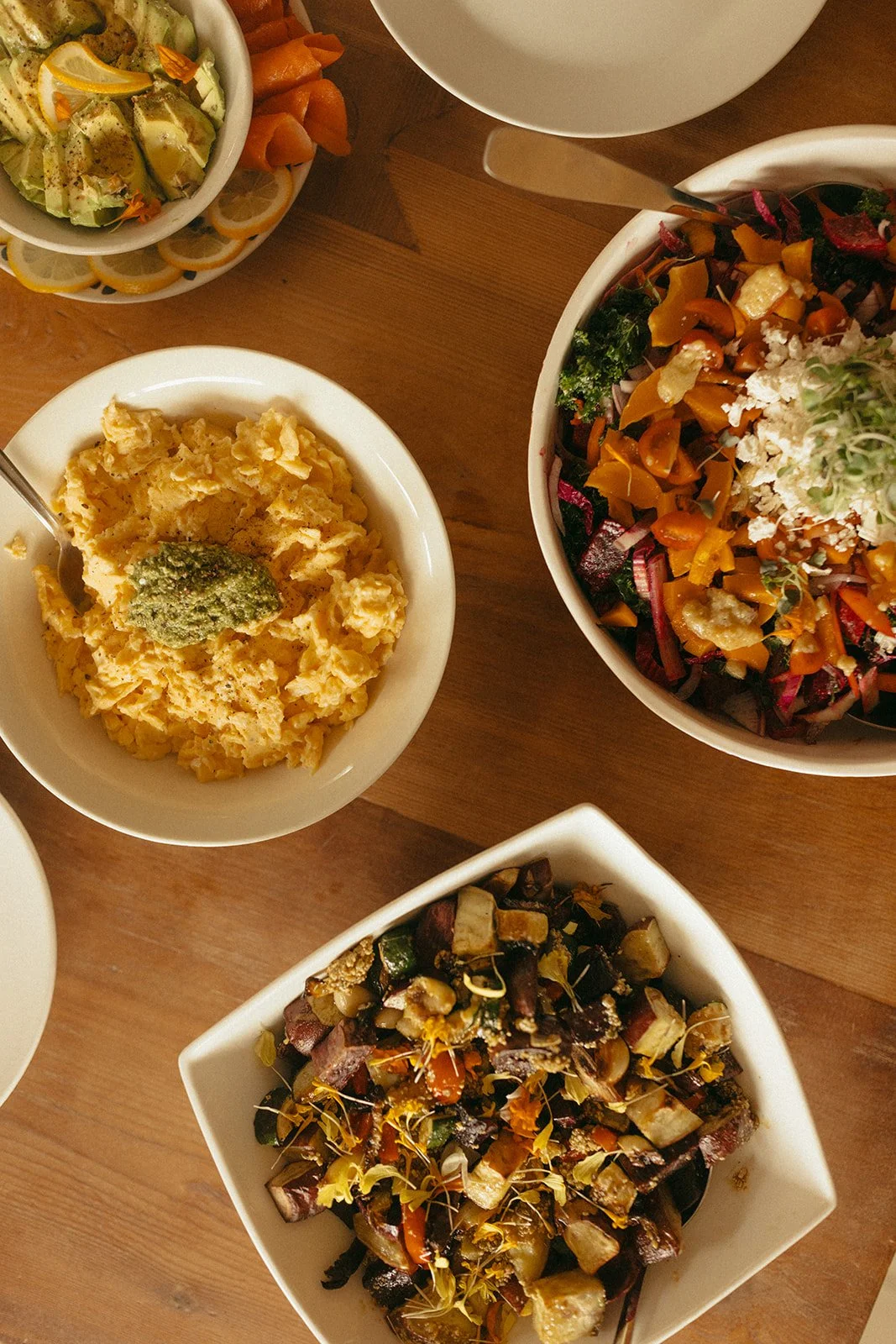
Adding more eggs (rich in choline and sulfur) to assist detoxification
Continuing with sulfur-rich foods to support Phase II detox (the step where toxins get converted for safe removal)
-
Reconnect with Your Body’s Rhythm
Whether you’re cycling on the Peloton more lately or postmenopausal, your body moves in rhythms. It NEEDS rhythm. Your hormones, digestion, sleep, and energy all ebb and flow in patterns — and your nervous system plays a key role in regulating those patterns.
This week is an invitation to reconnect with that rhythm through consistent, nourishing habits that support your hormones, your gut, and your nervous system. As I spoke on in this week’s coaching call, the nervous system is a pillar for supporting our gut microbiome health and keeping our hormones happy.
1. Foods to Support Elimination, Digestion, and Hormone Balance
Foods rich in fiber, antioxidants, and healthy fats help your liver and gut break down and eliminate excess estrogen and other hormonal byproducts. The meal plan in both week 1&2 and week 3&4 contain these goodies. This can reduce:
Bloating
Mood swings
Fatigue
Mini Tip: Add a serving of cruciferous vegetables (like broccoli or Brussels sprouts) or fiber-rich fruits to at least one meal daily. If these foods don’t agree with you I’d highly encourage reaching out to me directly so we can find out more tips on WHY, as well as alternatives!
2. Build a Gentle Routine for Year-Round Detox
Small, consistent habits help your body stay in rhythm, supporting smooth digestion and steady energy. Examples include:
Morning movement (even 5–10 minutes of gentle stretching)
Hydration first thing in the morning
Mindful meals without distractions
Mini Tip: Before each meal, take 3 slow, deep breaths to signal your nervous system that it’s time to digest.
3. Why a Healthy Gut is Key for Hormonal Balance
Your gut microbiome is crucial for metabolizing hormones. A balanced gut helps clear excess estrogen and other metabolites, which may reduce:
PMS symptoms
Menopausal hot flashes
General “off” feelings
Mini Tip: Include probiotic-rich foods like yogurt, kefir, or fermented vegetables 2–3 times per week. If you’re sensitive to dairy or have functional/chronic constipation, then I’d highly encourage taking a probiotic supplement BEFORE these other additives to stabilize the environment.
4. Nervous System Connection: Tap Into Your Body’s Natural Rhythm
Your nervous system controls stress, digestion, sleep, and recovery — all of which affect hormone balance. Chronic stress or prolonged “fight or flight” activation can:
Slow digestion
Impair liver detoxification
Disrupt hormonal signals
Engaging your parasympathetic nervous system (“rest and digest”) allows your body to process nutrients efficiently, clear toxins, and restore hormonal balance.
5. Practical Nervous System Practices
Techniques to shift your nervous system into a relaxed state include:
Deep breathing exercises
Gentle movement or stretching
Mindful pauses or short meditation sessions
Mini Tip: Set a timer 2–3 times per day to pause, take 5 slow breaths, and check in with your body.

worksheets/pdf
